
India’s Labour Law Consolidation Has Changed the Rules for Every Workplace

Four Labour Codes India — employer obligations and workforce compliance
India’s central government has consolidated over 29 central labour laws into four Labour Codes — the Code on Wages, 2019; the Industrial Relations Code, 2020; the Code on Social Security, 2020; and the Occupational Safety, Health and Working Conditions Code, 2020. Once fully notified and implemented at the state level, these Codes will replace a complex web of legislation that governed employment relationships for decades. For employers, this is not merely a re-labelling of existing law — it introduces new definitions, new thresholds, and new compliance obligations that require immediate attention.



The consolidation creates both opportunities and challenges. Employers benefit from a more streamlined statutory framework, but must review and update employment contracts, standing orders, HR policies, and payroll structures to align with the new requirements. Employees, on the other hand, benefit from expanded definitions of worker, broader social security coverage, and strengthened rights in relation to wages and working conditions. Understanding what has changed — and what has not — is essential for both sides of the employment relationship.
What Each Labour Code Covers
- Code on Wages, 2019
- Governs minimum wages, payment of wages, equal remuneration, and bonus entitlement across all sectors and categories of employment. Introduces a universal minimum wage floor applicable to all workers, including those in the unorganised sector.
- Industrial Relations Code, 2020
- Covers trade unions, conditions of employment, industrial disputes, and the process for retrenchment, layoff, and closure. Raises the threshold for establishments requiring prior government permission before retrenchment or closure from 100 to 300 workers.
- Code on Social Security, 2020
- Consolidates EPF, ESI, gratuity, maternity benefit, and employees’ compensation provisions. Introduces new provisions for gig workers and platform workers, including registration and entitlement to social security benefits through a designated fund.
- Occupational Safety, Health and Working Conditions Code, 2020
- Governs health, safety, and working conditions across factories, mines, construction sites, and other establishments. Introduces a single registration for establishments covered under the Code and consolidates multiple inspection regimes.
While the Codes have received Presidential assent, their implementation is contingent on state-level notifications. Several states have already issued draft rules, and employers should be monitoring developments in the states where they operate to ensure timely compliance.
The Labour Codes do not simply restate existing law — they introduce new definitions, thresholds, and obligations that require employers to review their entire HR and compliance framework before implementation is notified in their state.
Immediate Steps Employers Should Take Now
- Audit existing employment contracts against the new Code definitions of “worker” and “employee” — the categories have changed
- Review wage structures for compliance with the Code on Wages, including the computation of basic wages for PF and gratuity purposes
- Update standing orders and HR policies to reflect the Industrial Relations Code thresholds applicable to your establishment
- Assess social security contribution obligations under the new Code on Social Security for all categories of workers
- Monitor state-level notifications for implementation timelines applicable to your place of business
- Review retrenchment and exit policies in light of the revised Industrial Relations Code thresholds
Read This : Are Non-Compete Clauses Enforceable in India Under the New Labour Framework?
What About Gig Workers and Platform Workers?
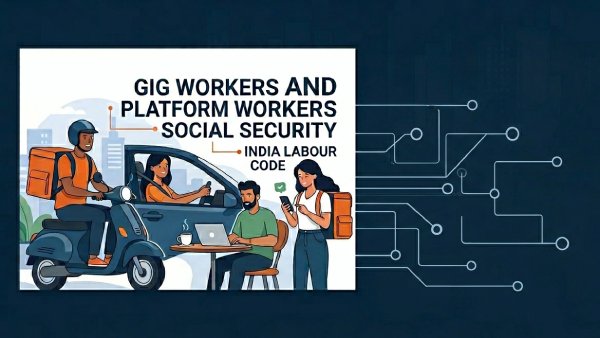
One of the most significant developments in the Code on Social Security, 2020 is the introduction of provisions specifically covering gig workers and platform workers — two categories that were entirely outside the scope of traditional labour legislation. The Code defines a gig worker as a person who performs work or participates in a work arrangement and earns from such activities outside of a traditional employer-employee relationship.
The Code provides for the registration of gig and platform workers and their entitlement to social security benefits through a designated fund to be established by the central government. The quantum of contribution from aggregators and the specific benefits available are to be prescribed by rules. Businesses operating platform models — ride-hailing, food delivery, freelance platforms — should monitor state-level rule-making closely and assess their exposure under these provisions.
The question of whether gig workers can also claim rights under the Industrial Relations Code — particularly protection against arbitrary termination of their engagement — remains an evolving area. The classification of the relationship between a platform and its workers will be central to how courts and tribunals apply the new framework in practice. Employers in the platform economy should seek specific legal advice on their contractual arrangements with gig workers in light of the Codes.